We test a closer by opening the door wide and letting go. It should click shut. Plenty stop an inch short, or swing back and bang.
The usual story
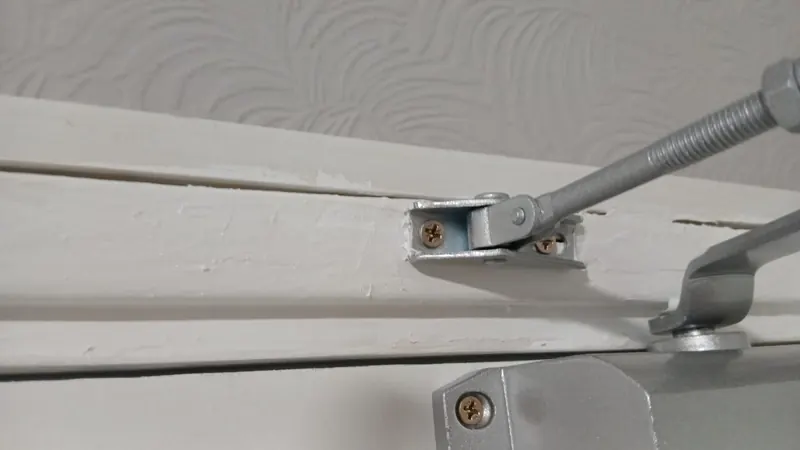
Somebody finds the door heavy, so they fiddle with a screw on the side of the closer and the door slows right down. Now it never reaches the latch. Other times the arm has worked loose from the head of the door, and the photo shows the bracket there. Whatever it's screwed into has to be solid, and after a few years of slamming it often isn't.
What we do
Valves first. There are two, and a small turn on each is often the whole repair, which costs next to nothing. Oil down the face of the door means the closer is finished and we swap it.
Stripped screw holes get properly repaired before anything goes back on. Longer screws in the same holes is no cure, and the arm will be hanging off again within a month.
The replacement is picked for the door. Width and weight matter, and so does it being a closer made for fire doors. We bring a few sizes in the van, so a flat door is usually done in one visit.
Before you blame the closer
A sagging door beats any closer. A dragging corner and a tired closer often turn out to be one fault, and the hinge is the cause, so we check the hinges and the floor gap first.
Some corridors have a magnet or hold-open arm wired to the alarm. Those are for an alarm engineer. We work around them.
Questions we get asked
Can you make it lighter?
Usually a bit. It still has to pull itself shut against the seals.
Does every flat need a closer on the front door?
A door onto a shared stair or corridor normally does. Your fire risk assessment will say.
Send the list and the postcode. We will come back with a fixed price for each door.
Get a price