Gap faults usually start at a hinge. A door with daylight round it, or a corner that drags on the floor, has often dropped on one.
Measuring
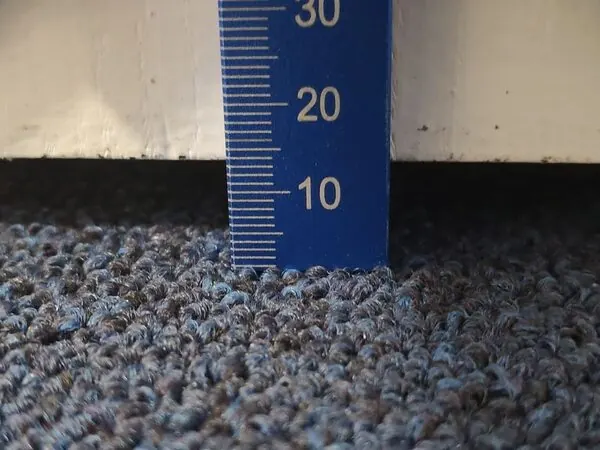
We use a gauge and not a tape, because a tape is a guess at a few millimetres. The bottom gap is the one people argue about, and we measure it with the floor covering down. The photo shows a gauge standing on carpet pile. That's the number that matters. We've seen doors pass on bare boards and fail once the carpet was down.
Why gaps open up
A hinge can lose a screw, or the hole wears out and the screw spins without gripping. Sometimes the frame has been knocked, and the gap is wide at the top and tight at the bottom. And now and then there's a split along the edge from a boot or a shoulder.
What we do
Screws first. A new screw of the right length in a repaired hole costs almost nothing. Then the hinge. A fire door wants proper hinges, normally three, and a door with two goes on the report as a fault.
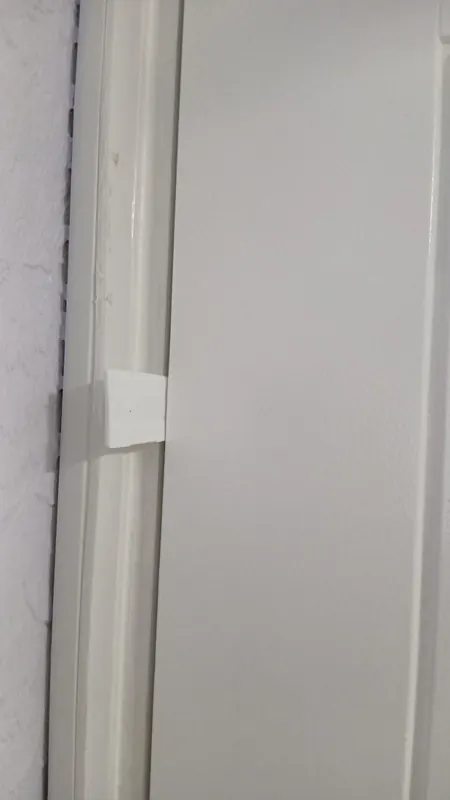
For a frame that has moved, we pack it behind and fix it through to the wall. Those little plastic packers are fine for checking with, but they're not the repair. A split edge gets cut back and new timber goes in, so the door stays.
Some doors are finished. The core is crushed, or the door has panels in it. We say so and recommend a plain certified doorset.
Questions we get asked
Can you just plane it?
We'd rather find out why it sticks. Plane the edge and you may take off the bit the seal sits in.
How big a gap is too big?
That depends on the door. The inspection report gives the limit.
Send the list and the postcode. We will come back with a fixed price for each door.
Get a price